- News
- lifestyle
- relationships
- parenting
- Children who play more do better in life
Trending
This story is from April 20, 2015
Children who play more do better in life
A recent report suggested that children who play regularly do well academically and have better social skills so gift your children more play time this Children’s day.
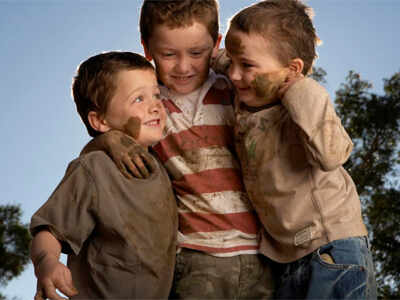
Kids who play more perform better in school
Less structured activities like playing hide and seek in the park to climbing trees and visiting the zoo can lead to better performance from academics point of view.

Children who are more involved in less structured activities will do better in academics as they are capable of setting their own targets and are much more flexible when it comes to switching between activities and they are capable enough to take charge of their life and control their mood. Says nutritionist, Sheela Tanna, “Kids who play are more fit, happy, competitive and fall less sick. Ball games are great in improving the mind and body coordination in kids.”
Free play and better self-directed executive function
Unscheduled and unsupervised play time is what parents
can gift to their children for their independent up bringing. Clinical psychologist and author Seema Hingorrany says, “Playing is known to be very therapeutic. It has a positive impact on brain increasing the feel good hormones. Children learn to be gregarious and they are able to enhance their social skills by playing.”
Seema further adds, “Children who play are known to have better attention spans, as they learn to multi task things better. Their focus is much better as compared to kids who do not play.” These kids learn to do their own job much earlier in life like tying their own shoe laces, ironing their clothes, getting ready for school and even ironing their own clothes.
Better social skills
It is on the play ground that children strengthen social bonds and build emotional maturity. Seema says, “Playing involves interactions with your peer groups which enhances social development and skills.” Children who play with other kids and have a big circle of friends have better social skills. They are much more adaptable and they learn to make their own decisions and solve their own problems. They get along with their peers better as equals rather than as their subordinates. They learn to fight for themselves early in life.
Student Counselor, Archana Sardesai says, “Parents should grant their children some free time to just play some unstructured game, do some imaginary landscape painting, read a fairy tale rather than dictating them to do some carefully planned educational game.” Free play is nature’s way of teaching children that they can take care of themselves and that they are not alone and helpless. Unstructured activities make the kids confident and prepare them for the future when they can take risk in life. Says Chulani, “Socially, kids who play have social skill like- team building, ability to cooperate with others especially in team sports, adaptation to groups, communication skills because they need to engage actively with one another.”
End of Article
FOLLOW US ON SOCIAL MEDIA









Photostories
Featured In Lifestyle

Popular Categories
Trending in Entertainment
Latest MoviesBollywood MoviesHollywood MoviesTamil Movies 2024Telugu Movies 2024Malayalam Movies 2024Kannada Movies 2024Marathi Movies 2024Bengali Movies 2024Top Rated Movies 2024Best Hindi MoviesBest English MoviesBest Telugu MoviesBest Tamil MoviesBest Malayalam MoviesBest Kannada MoviesBest Bengali MoviesUpcoming Hindi MoviesBest Movies Of All TimeBest Hindi Movies of All Time
Trending in Etimes
Trending in TV
Trending in Lifestyle
Trending in Regional
Movie Reviews
The Wild Robot ReviewSmile 2 ReviewAayushmati Geeta Matric Pass ReviewJigra ReviewVicky Vidya Ka Woh Wala Video ReviewBougainvillea ReviewSir (Tamil) ReviewRocket Driver ReviewAaryamala ReviewBlack ReviewVettaiyan ReviewJhini Bini Chadariya ReviewColourrs Of Love ReviewAmar Prem Ki Prem Kahani Review
Upcoming Hindi Movies
Upcoming Regional Movies
Latest News
Google still has to bring this one ‘change’ despite getting pause order on Play store rulingDance+ Judge Remo Dsouza, wife Lizelle D'souza and 5 others booked for cheating dance troupe of Rs 11.96 CrHow Apple's new iPhone 16 series may have brought ‘a positive sign’ for company in ChinaPriyanka Chopra dazzles in a shimmery corset gown for 'Paani' screening; fans call 'jiju' Nick Jonas a lucky manVijay Varma reveals his negative roles always made women feel intimidated: 'It hurt when Sunidhi Chauhan said she was scared of me'"I'm not impressed”: Pro Football Hall of Famer Troy Aikman criticized the Dallas Cowboys amid their underwhelming start to the seasonOne bomb hoax can cost an airline over Rs 3 croreTamil Nadu toddler dies as TV set falls on himKartik Maas 2024 Start and End Date: Time, Rituals and SignificanceShakib Al Hasan supporters rally in Dhaka before South Africa Test series'Jigra' box office collection day 7: The Alia Bhatt starrer sees a further drop in numbers as it completes its one week run, inches closer to Rs 25 croreNumerology in Tarot: Decoding Number Symbolism in Major and Minor ArcanaLondon’s dream of hosting WWE'S WrestleMania faces major setbackHeartbreak! Rishabh Pant joins rare list of keeper-batters to be dismissed on 99 in a TestTom Holland talks 'Spider-Man 4' script; How he sees challenges in featuring the film in MCU timeline7 things to consider when choosing your eyesight glassesHappy Karwa Chauth 2024: Wishes, Messages, Quotes, Images, Facebook & Whatsapp statusOptical Illusion: Only 1% top genius can tell which man is carrying the most weight of the wood log
Other Group Sites -
ETimes is an Entertainment, TV & Lifestyle industrys promotional website and carries advertorials and native advertising.